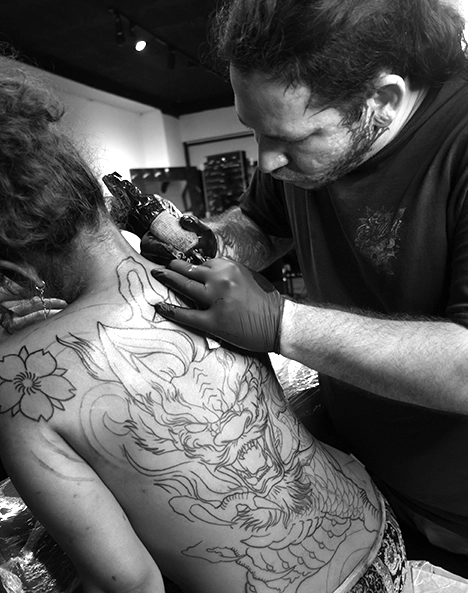
We answer the same questions constantly. Not because clients aren’t paying attention, but because tattooing is genuinely confusing territory — there’s a lot of conflicting information online, and the stakes feel high when it’s permanent. Here are the questions we hear most, answered directly.
Before Your Tattoo
How do I prepare for my session?
Eat a full meal 1–2 hours before. Drink plenty of water. Get a good night’s sleep the night before. Wear loose, comfortable clothing that allows easy access to the area being tattooed. Avoid alcohol for at least 24 hours (ideally 48). Don’t arrive on an empty stomach — low blood sugar makes pain worse and fainting more likely.
Can I take painkillers before my session?
Tylenol (acetaminophen) is fine if you need it. Ibuprofen and aspirin are blood thinners — avoid them for 24 hours before your appointment. Numbing creams work for some areas; ask your artist before applying, as some affect how the skin takes ink.
What should I tell my artist before we start?
Tell them: any skin conditions in the area, any medications you’re currently taking (especially blood thinners or immunosuppressants), any history of keloid scarring, any allergies (particularly to metals or topical antibiotics), and whether you’ve eaten recently.
How long will my session take?
Small pieces: 1–3 hours. Medium pieces (forearm, calf): 3–6 hours. Large pieces (half sleeve, full back section): 5–8 hours. Full sleeve or full back: multiple sessions. Time varies significantly based on style — fine line work is faster than hyperrealism; black and grey is faster than full color.
During Your Tattoo
How much will it hurt?
It depends on placement. On a scale where 1 is barely noticeable and 10 is genuinely hard to sit through: outer arm and thigh (2–4), shoulder and upper back (3–5), forearm and calf (3–5), ribcage and sternum (6–8), spine (7–9), inner arm and inner thigh (6–8), hands and feet (7–9), head and neck (7–9).
What if I need a break?
Ask for one. Good artists expect this and build it into long sessions. Standing up, eating a snack, and walking around for 10 minutes can reset your pain tolerance significantly. There’s no award for sitting through unnecessary misery.
Is it normal to feel dizzy or nauseous?
Yes, especially in the first tattoo or during a particularly painful section. This is often a blood sugar and adrenaline response. Tell your artist immediately — they’ll stop, give you juice or a snack, and wait until you feel better. It’s very common and nothing to be embarrassed about.
After Your Tattoo
Can I shower with a new tattoo?
Yes — but avoid soaking. A normal shower is fine. Keep the tattoo out of direct water pressure for the first few days. No baths, hot tubs, or swimming until the surface is fully healed (typically 3–4 weeks minimum).
Can I work out with a new tattoo?
Light activity after 48–72 hours is generally fine for tattoos on limbs that aren’t directly stressed. Avoid heavy sweating on the tattoo for the first week — sweat can irritate a healing tattoo. Avoid any gym equipment pressing against or rubbing the fresh tattoo. For chest or back pieces, modify your workout accordingly.
Can I go in the sun?
Not during healing. Zero sun exposure on a fresh tattoo for at least 3–4 weeks. After healing, always apply SPF 50+ before sun exposure. No exceptions. UV is the primary cause of long-term tattoo fading.
My tattoo is itchy — is that normal?
Very normal, especially during the peeling phase (days 5–14). Do not scratch. Tap the area gently if needed. Keep it moisturized. The itch is part of the healing process.
The color looks faded after healing — is something wrong?
Not necessarily. Fresh tattoos often look more vivid than healed ones — the swelling and the presence of excess ink on the surface make colors pop more immediately after the session. After healing, the true settled color appears. Some lightening is normal. If there are significant patchy areas, that’s what touch-up sessions are for.
How do I know if my tattoo is infected?
Normal healing involves redness, swelling, and tenderness for the first 2–3 days, then peeling and itching for 1–2 weeks. Infection signs: redness and swelling that get worse after day 3 rather than better; warmth that intensifies; pus (yellow or green discharge, different from clear plasma); red streaks extending from the site; fever. If you see any of these, contact us immediately.
Long-Term Care
How do I keep my tattoo looking good for decades?
Sunscreen consistently. Regular moisturizing. Avoiding prolonged sun exposure. Staying hydrated. That’s genuinely 95% of long-term tattoo preservation. The other 5% is quality ink from a skilled artist — which is already done if you chose well.
When do tattoos need touch-ups?
Most quality tattoos don’t need touching up for years. Fine line work and light colors fade faster than bold black lines. Areas that see high UV exposure or significant skin movement (hands, feet, inner joints) fade faster. When you decide it’s time, any skilled artist can assess what needs work.
Can I get a tattoo on top of an old tattoo?
Yes — cover-ups are a significant part of what we do. The key is choosing a design that’s appropriate for the cover-up: generally darker, bolder, and large enough to fully dominate the old work. Laser lightening before a cover-up significantly expands your design options. Contact us for a consultation — good cover-up work requires careful planning.
Still have questions? Our team is reachable on WhatsApp any time. No question is too basic — we’d rather answer 10 obvious questions than have you make a decision based on wrong information.