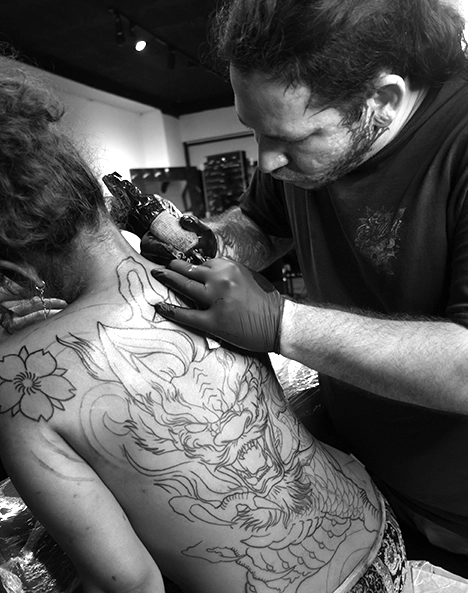
A tattoo is a wound. Not a dramatic one, but a wound nonetheless — hundreds of thousands of needle punctures delivering pigment into the dermis layer of your skin. How you treat that wound over the next 4–6 weeks determines, in significant part, how that tattoo looks for the rest of your life.
This is the aftercare protocol we give every client at Pangea Ink. Follow it precisely.
Immediately After Your Session (Hours 1–4)
Your artist will cover the tattoo before you leave the studio. There are two common approaches:
- Traditional wrap (plastic wrap or bandage): Leave it on for 2–4 hours, then remove and wash gently.
- Second skin / Saniderm / Tegaderm: A medical-grade transparent film that stays on for 3–5 days. We use this for most of our work — it’s the better option for most clients because it protects the tattoo during the most vulnerable period without requiring immediate care.
Keep the tattoo elevated if possible. Don’t expose it to sunlight. Avoid touching it with unwashed hands.
Days 1–3: The Weeping Phase
Your tattoo will ooze a mixture of plasma, blood, and ink during the first 24–48 hours. This is completely normal. If you’re using second skin film, you’ll see this accumulate under the bandage — that’s fine. The film is doing its job.
If using traditional wrap/bandage:
- Remove the wrap after 2–4 hours
- Wash gently with mild, fragrance-free soap and lukewarm water (not hot)
- Pat dry — never rub — with a clean paper towel
- Apply a thin layer of fragrance-free lotion (Lubriderm, Aveeno, or specifically tattoo aftercare lotion)
- Leave uncovered and repeat washing 2–3 times daily
Do not: use petroleum jelly (Vaseline), Neosporin, or any product with fragrance or lanolin. These clog pores and can cause ink to lift prematurely.
Days 3–5: Removing Second Skin (If Applied)
If you have second skin film, remove it in the shower. Let warm water run over the edge and peel slowly from one corner — never pull it straight off. The warmth loosens the adhesive. After removal, wash gently and begin the lotion routine.
Some redness around the edges of second skin film is normal. If you see significant irritation, blistering, or signs of allergic reaction to the adhesive, remove the film earlier and contact us.
Days 5–14: The Peeling Phase
The tattoo will begin to peel — similar to a sunburn, but more colorful. Flakes of skin with traces of ink will come off. Do not pick at them. This is the most critical rule of aftercare. Picking peeling skin removes ink with it and creates uneven healing.
Let the skin peel naturally. It will be itchy — resist the urge to scratch. Instead, tap the area gently with a clean finger if the itch is intense. Keep moisturizing 2–3 times daily.
The tattoo will look dull and patchy during this phase. This is normal. The true healed appearance won’t reveal itself until the skin has fully regenerated.
Days 14–30: Cloudy Skin Phase
After peeling, you’ll notice the tattoo looks slightly foggy or has a milky quality. This is a thin layer of new skin that has grown over the tattoo — it will become transparent as the skin continues to mature.
Continue moisturizing. Continue avoiding sun exposure. This phase is where most people make the mistake of thinking the tattoo is healed and relaxing their care — don’t. The skin underneath is still regenerating.
Weeks 4–6: Full Surface Healing
By week 4–6, the tattoo should look and feel like normal skin. The color will have settled and the true quality of the work will be visible. This is when touch-up assessments are made — some areas may have healed lighter or patchier than expected, which is normal and fixable.
Permanent Aftercare: Protecting Your Tattoo for Life
Healing is only part of the story. How you treat your tattoos long-term determines how they age:
- Sunscreen — always. Apply SPF 50+ to tattooed areas before any sun exposure. UV is the number one cause of premature tattoo fading.
- Moisturize regularly. Dry skin ages tattoos faster. Keep tattooed skin moisturized as part of your regular routine.
- Stay hydrated. Skin hydration affects ink clarity. Drink water.
- Avoid prolonged sun exposure. Even with sunscreen, extended UV exposure degrades pigment over time.
Warning Signs: When to Contact Us or Seek Medical Attention
- Excessive redness that spreads beyond the tattoo border after day 3
- Pus (different from the clear plasma in the first 24 hours)
- Fever combined with tattoo pain
- Swelling that increases after the first 48 hours rather than decreasing
- Red streaks radiating from the tattoo site
These signs can indicate infection. Contact us first — we’ll assess whether you need to see a doctor. Most apparent infections can be caught early and managed easily; ignored infections can damage the tattoo and, more importantly, your health.
Our WhatsApp is always open to clients during the healing process. You’re never on your own with this.